
Basic Definition
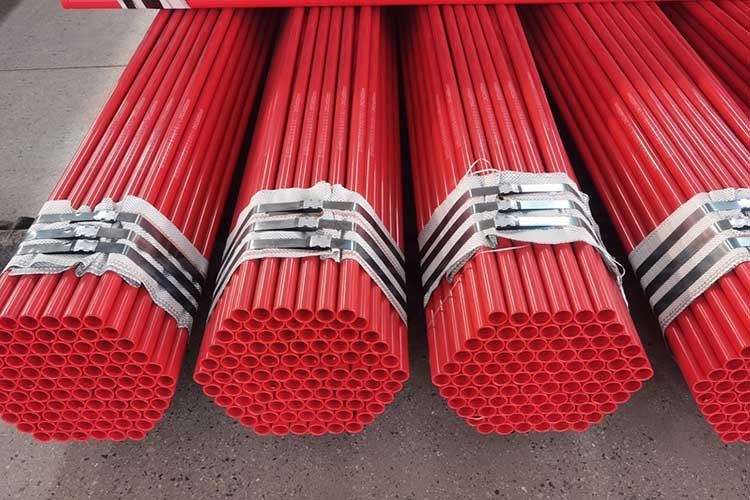
Fire-fighting plastic-coated steel pipes are specialized steel-plastic composite pipes for fire sprinkler and fire hydrant systems. Using straight seam welded pipes, seamless steel pipes, or spiral steel pipes as the base material, they undergo sandblasting to remove rust and preheating. The inner and outer walls are then coated with flame-retardant modified epoxy resin (EP) powder at high temperatures and cured. The outer wall is uniformly a striking red (fire-fighting identification color). This product perfectly combines the mechanical strength of steel pipes with the corrosion resistance, flame retardancy, and smooth water delivery advantages of plastic, making it an upgraded replacement for traditional hot-dip galvanized fire-fighting pipes.
Production Process Flow
Base Pipe Pretreatment: Steel pipes are cut to length and sandblasted to Sa2.5 grade to thoroughly remove oxide scale and oil stains;
High-Temperature Preheating: The entire pipe is heated to the appropriate temperature for powder melting;
Internal and External Electrostatic Spraying: Flame-retardant epoxy powder is simultaneously sprayed onto the inner and outer walls;
High-Temperature Curing and Baking: The powder cross-links to form a dense, seamless anti-corrosion film;
End Processing: Grooving, threading, and flange beveling;
Finished Product Inspection: Spark leak detection, coating thickness inspection, water pressure resistance test, and adhesion impact test.
Core Materials and Specifications
Base Material
Q235B straight seam ERW welded pipe, 20# seamless steel pipe, Q355 spiral welded pipe, with a maximum pressure resistance of 2.5MPa, meeting the requirements of high-pressure water supply for fire protection.
Coating (Fire-fighting flame-retardant epoxy EP)
Coating thickness: Inner wall 300~400μm, outer wall 400~800μm; Contains a flame-retardant formula, does not burn at high temperatures, does not soften or peel off, and complies with fire-fighting flame-retardant standards; Food-grade inner wall, does not leach harmful substances, and does not pollute water quality during long-term water storage.
Common Diameters
DN50~DN1200, mainstream for indoor sprinklers DN65~DN300; large-diameter spiral coated pipes are used for large underground pipe galleries and municipal fire protection trunk lines.
Appearance Marking
Standard bright red outer wall, the industry-standard fire warning color, facilitating the differentiation between water supply and drainage and gas pipelines during fire protection engineering acceptance.
Advantages of Fire-Fighting Plastic-Coated Steel Pipes
Superior Corrosion Resistance, Service Life Up to 50 Years
The epoxy coating completely isolates water, oxygen, and soil acids, alkalis, and salts, preventing rust and scale buildup even when buried underground, in damp basements, or in chemical workshops; ordinary galvanized pipes rust and produce yellow water that clogs sprinkler heads within 8-15 years.
Smooth Inner Wall Prevents Sprinkler Head Clogs
The mirror-smooth inner wall reduces hydraulic resistance by 30% compared to galvanized pipes, preventing rust and scale buildup, eliminating sprinkler head clogging and ensuring stable water supply during fires.
Flame-Retardant and Safe, Suitable for Firefighting Conditions
The coating contains a special flame retardant, preventing self-ignition upon contact with open flames and ensuring the coating does not peel off. The pipe structure remains stable under high temperatures, meeting mandatory requirements of building fire safety codes.
Multiple Connection Methods for Efficient Construction
Mainstream grooved clamp connection (installation speed 3 times faster than welding), also supports threaded, flanged, and bimetallic welding, eliminating the need for professional welders, significantly shortening fire protection construction time, and is earthquake-resistant and adaptable to minor foundation settlement.
Resistant to foam extinguishing agent corrosion
It can withstand high-expansion foam for fire fighting and resists long-term erosion by solvent extinguishing agents. It is specially designed for fire protection systems in chemical industrial parks and oil depots.
Fire-fighting Plastic-Coated Steel Pipe Connection Methods
Grooved (Clamp) Connection: DN65~DN400, preferred for indoor sprinkler and fire hydrant systems, easy to install and disassemble, and earthquake-resistant;
Threaded Connection: DN50 and below for small branch pipes;
Flanged Connection: Large-diameter main pipelines and pump room equipment connections;
Bimetallic Welding: Long-distance buried pipelines, with a protective coating applied after welding.
Application of fire-fighting plastic-coated steel pipes
Indoor Fire Protection in Buildings: Automatic sprinkler systems in high-rise commercial buildings, office buildings, and residences; indoor fire hydrant networks;
Underground Engineering: Underground parking garages, integrated utility tunnels, and buried fire protection pipelines in civil defense projects;
Special Industrial Plants: Fire protection pipelines in corrosive environments such as chemical industrial parks, oil depots, pharmaceutical factories, and electroplating workshops;
Municipal Outdoor Fire Protection: Main fire-fighting arteries on urban roads and outdoor fire hydrant networks in industrial parks;
Fire water supply systems for ships, ports, and tunnels.
Fire-fighting plastic-coated pipes vs. hot-dip galvanized steel pipes
| Comparison Item | Fire-Rated Epoxy Plastic Coated Steel Pipe | Traditional Hot-Dip Galvanized Steel Pipe |
|---|---|---|
| Anti-Corrosion Service Life | Over 50 years, minimal maintenance required | Only 8–15 years, regular rust removal and repairs necessary |
| Inner Wall Scaling & Sprinkler Clogging Risk | Smooth lining, zero rust buildup, no sprinkler blockage | Prone to rust and limescale accumulation, high risk of sprinkler clogging |
| Flame Retardant Performance | Special flame-retardant epoxy coating designed for fire service | Zinc coating easily oxidizes and peels off under high temperatures |
| Water Quality Impact | No rusty water, no water contamination | Rust generates brown sediment and pollutes water medium |
| Underground Installation Compatibility | Resistant to acidic & alkaline soil, suitable for long-term underground burial | Vulnerable to soil corrosion; leakage and rust appear within 3–5 years underground |
| Total Long-Term Operating Cost | Slightly higher upfront cost, nearly zero maintenance expense later | Low initial purchase price, high recurring replacement and repair costs over service life |
Conclusion
We supply fire protection red epoxy plastic coated steel pipes based on ERW seamless and SSAW spiral substrates, complying with GB/T5135.20, NFPA13 and EN standards with complete fire inspection reports and CE certification. Available in grooved, threaded and flanged ends for fire sprinkler and hydrant systems.